
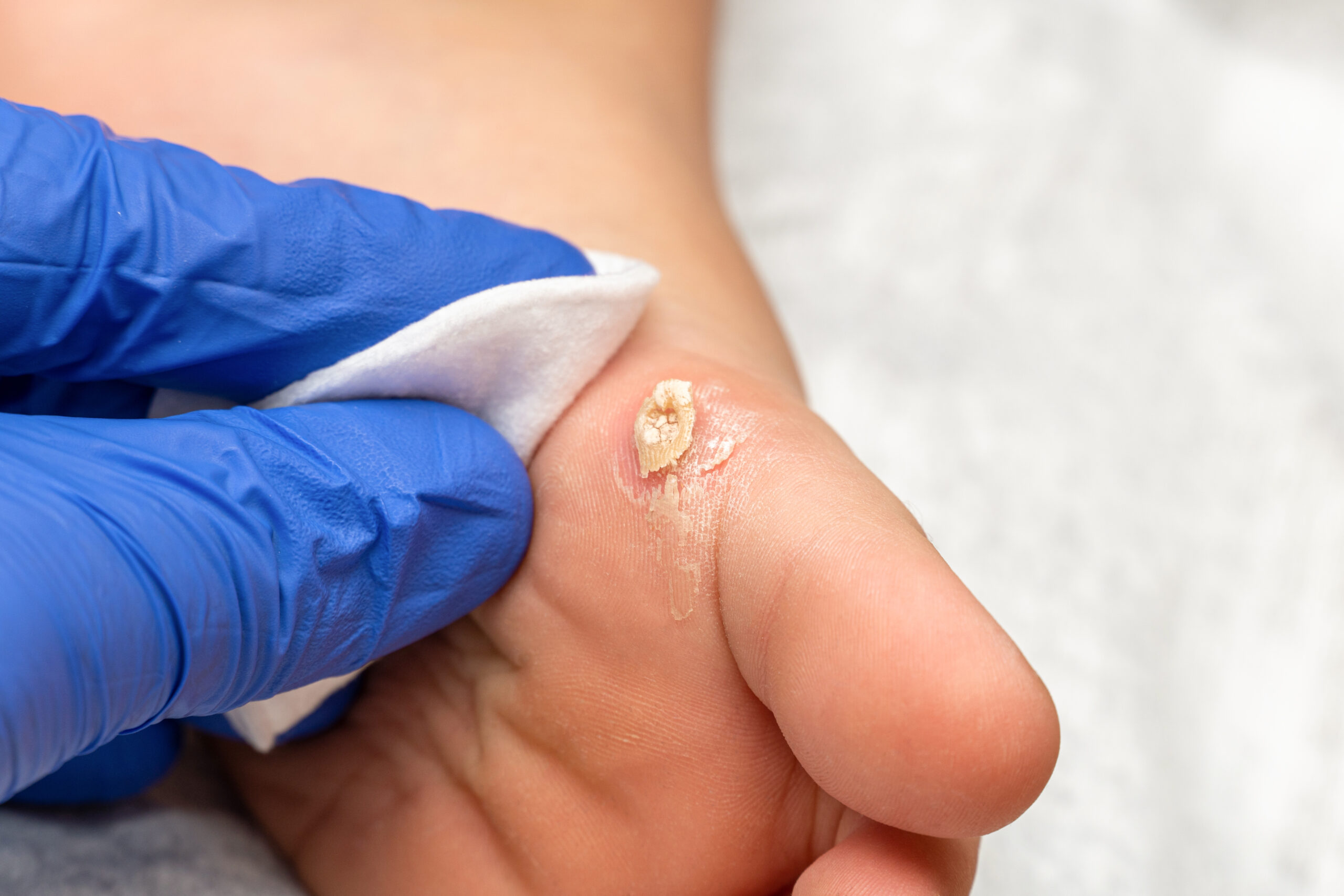
Plantar warts are a fairly common skin growth that occurs on the soles of the feet (particularly the heels, toes and the areas that bear the weight of the body). They are caused by the human papillomavirus (HPV) and typically present as small, rough, thickened patches of skin. Whilst they are generally of no consequence, they can be uncomfortable, tender and can cause problems with walking. It’s quite common for people to become concerned if the warts persist, increase in number or become painful. A fairly frequent query is: do plantar warts actually need surgery? At CCube Homoeopathy, with Dr Rashmi Chandwani as the guiding doctor, the emphasis is on looking at the individual’s symptoms and then working out a completely individualised homoeopathic approach to the management of plantar warts.
What are plantar warts?
Plantar warts are caused by the human papillomavirus (hpv). They are essentially a benign proliferation of the skin cells that is the result of the virus.
Plantar warts are warts that occur on the plantar surface (the sole of the foot). They can be single or in clusters and often have little black or dark dots in them. These dots are small blood vessels. They can grow inwards as a result of the pressure of body weight when you’re standing and walking.
Some common characteristics include:
- Rough, thickened skin on the sole.
- Small, round or irregular in shape.
- Tenderness or discomfort on walking.
- Tiny dark spots within the wart.
- Numerous closely grouped growths.
- Discomfort on application of pressure.
At CCube Homoeopathy Dr Rashmi Chandwani stresses the importance of looking at the full symptom picture rather than just the wart itself.
Do plantar warts need surgery?
The presence of a plantar wart in no way automatically means that surgery is required. Homeopathy provides a more gentle, individualised approach to patients concerned about pain, recurrence and the effect that persistent warts can have on their day to day lives. Homoeopathy is an individualised approach which takes into account the type of wart, where it is, how long it’s been there, the sensations associated with it and the person’s overall symptom picture.
At CCube Homoeopathy Dr Rashmi Chandwani looks at the individual characteristics and then selects a homoeopathic remedy accordingly. The aim is to provide individualised care and of course to address the patient’s concerns about plantar warts.
Non-Surgical vs Surgical Treatments: The Homoeopathic Perspective
The homoeopathic approach
Homoeopathy is an individualised system of medicine. You don’t just pick a remedy because the patient has a plantar wart. The homoeopath looks at the totality of the individual’s symptoms.
Some factors considered include:
- Whether the wart is hard, soft, flat or raised.
- Whether it’s painful or painless.
- whether the pain is burning, stitching or pricking.
- whether it’s a solitary growth or occurs in clusters.
- Whether the wart is on the heel, the sole or the toes.
- The length of time the wart has been there.
- The patient’s general state of health and associated symptoms.
At CCube Homoeopathy Dr Rashmi Chandwani is very much aware of these individual differences and will take them into account when selecting a homoeopathic prescription.
How does Homoeopathy deal with plantar warts?
Homoeopathy is all about individualisation. Two people with plantar warts could have absolutely different symptom pictures and so would in all probability require different prescriptions.
Some commonly discussed homoeopathic medicines include:
Thuja Occidentalis
Thuja is a very commonly used homoeopathic medicine in the context of warts and is associated with various types of wart-like growths. The choice of medicine will be based on the totality of the symptoms.
Nitricum Acidum
Nitricum Acidum is the traditional choice when warts are accompanied by characteristic sharp, splinter-like or stitching pains. The associated symptoms are the guide to individualised prescription.
Causticum
Causticum is another remedy which is traditionally spoken of in the homoeopathic literature for certain kinds of warts (particularly where the appearance and the accompanying symptoms are characteristic).
Antimonium Crudum
Antimonium Crudum is used in certain cases of thickened, hard skin with characteristic wart-like growths.
Dulcamara
Dulcamara is traditionally used for various skin complaints and wart types, depending on the individual’s particular presentation.
Frequently Asked Questions About Plantar Warts
Do plantar warts always require surgery?
No, plantar warts do not always require surgical intervention. Homoeopathy focuses on an individualised approach, considering the patient’s symptoms, wart characteristics and overall health. At CCube Homoeopathy, Dr Rashmi Chandwani emphasises personalised homoeopathic care with the aim of supporting the body’s natural healing response.
Can plantar warts be managed through non-surgical homoeopathic treatment?
Yes. Homoeopathy offers an individualised, non-surgical approach to plantar wart care. The selection of a homoeopathic medicine is based on the location, appearance, tenderness, duration and other individual symptoms.
What is the difference between non-surgical and surgical treatment for plantar warts?
Non-surgical approaches aim to manage plantar warts without an operation, while surgical approaches involve physically removing wart tissue. Homoeopathy is a non-surgical system of individualised care.
Can homoeopathic treatment help with painful plantar warts?
Yes. Homoeopathic case-taking considers pain while walking, tenderness on pressure, the location of the wart and the patient’s individual symptoms. At CCube Homoeopathy, Dr Rashmi Chandwani takes into account all these factors and provide individualised homeopathic medicines.
Why choose CCube Homoeopathy for plantar wart consultation?
CCube Homoeopathy, under the guidance of Dr Rashmi Chandwani, aims to provide personalised homoeopathic consultations based on each patient’s symptoms and individual health history. With an emphasis on careful case-taking, individualised prescriptions and follow-up, CCube Homoeopathy strives to make every patient’s experience comfortable and supportive.
At CCube Homoeopathy Dr Rashmi Chandwani would encourage you to be very attentive to any changes in your symptoms and to have the appropriate follow up. The approach is to look at the patient as a whole rather than just the wart. Patients should also avoid picking, scratching or cutting plantar warts themselves. Keeping the feet clean, not sharing footwear and using your own foot care items will all help to reduce the spread of HPV.
CCube Homoeopathy and Dr Rashmi Chandwani: The Benchmark in Individualised Homoeopathic Care
CCube Homoeopathy, with the experienced hand of Dr Rashmi Chandwani, is very much a patient centred practice with a strong emphasis on individualisation, a deep understanding of the individual case and the prescription being tailored to that individual. Dr Rashmi Chandwani has over 30 years’ experience and this has given her a great deal of clinical experience in the management of a wide variety of conditions, including skin problems such as plantar warts. At CCube Homoeopathy each patient is treated as an individual and it is recognised that the appearance, the site, the duration and the associated sensations of a wart will vary from person to person. The clinic is very much about taking the patient’s concerns seriously, explaining the condition in a way that the patient can understand and then guiding them through the process of care. Rather than just treating the wart in a one size fits all manner, the homoeopathic approach at CCube Homoeopathy is to look at the full picture of the case before arriving at a prescription. Patient education, follow up and continuity of care are all important aspects of the practice. The clinic is well known for its individualised approach and is a destination that many people go to when they are seeking to understand their skin problem and to explore the option of homoeopathic treatment. If you have plantar warts then you can go to Ccube Homoeopathy to discuss your particular case, to understand what is going on and to get the best advice.
When should you pay attention to plantar warts?
Although plantar warts are generally of no consequence, certain changes must never be ignored.
- The growth becomes quite painful.
- It bleeds repeatedly.
- It’s colour or appearance changes.
- It spreads rapidly.
- Walking becomes difficult.
- You’re not sure it’s actually a wart.
- You have diabetes, poor circulation or reduced sensation in your feet.
Final Thoughts: Choose Informed and Individualised Care
Plantar warts can be frustrating, particularly when they interfere with walking, daily activities and confidence. However, their presence does not automatically mean that surgery is necessary. Understanding the condition, recognising individual symptoms and making informed decisions are important parts of responsible healthcare. Homoeopathy offers an individualised approach based on the person’s characteristic symptoms and overall presentation.
At CCube Homoeopathy, Dr Rashmi Chandwani believes in the importance of listening to patients, understanding their concerns and providing personalised professional guidance. Every patient deserves attention, clarity and compassionate care. If you are experiencing persistent plantar warts, do not ignore changes or attempt self-treatment. With awareness, timely attention and responsible healthcare choices, you can take better care of your foot health and everyday comfort.