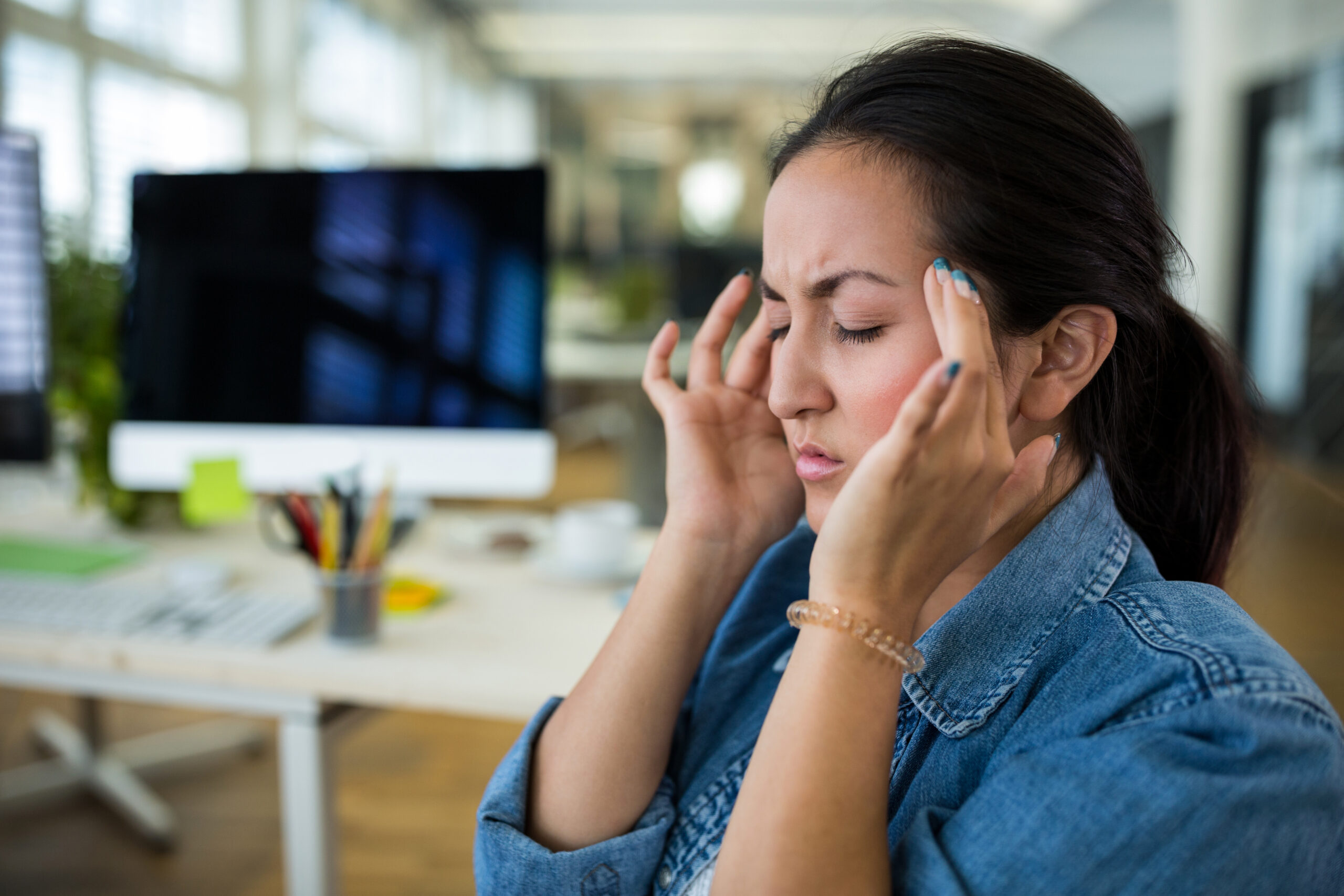
It can be confusing to experience a sharp and severe pain in the tooth,jaw, or in the cheek, particularly since it is not always clear at first, where the pain is coming from. Trigeminal neuralgia is a facial pain disorder caused by a problem with the trigeminal nerve and, in some cases, the pain can resemble that of a toothache because this nerve is responsible for transmitting sensations from the face, jaw, teeth, gums, and lips. At CCubeHomoeopathy, with Dr Rashmi Chandwani’s guidance, it is important to study the nature and pattern of the pain when forming a personalized homoeopathic treatment plan. By determining whether the pain is similar to normal tooth discomfort or instead matches the pattern of nerve pain, a person can give a more accurate description of their symptoms when seeing Dr Rashmi Chandwani for a consultation.
What Is Trigeminal Neuralgia?
Trigeminal neuralgia is connected with severe facial pain that affects one or more of the branches of the trigeminal nerve and the pain can be described as resembling an electric shock like shooting, stabbing, burning, or being extremely sharp. It may affect the cheek, the upper or lower jaw, the teeth, the gums or the lips, which makes it easy to confuse nerve pain with a dental problem. At CCubeHomoeopathy ,Dr Rashmi Chandwani places emphasis on the precise description of the pain—namely its position, how it feels, what triggers it, how often it occurs, how long it lasts and any other symptoms that accompany it—since these details aid in forming a more individualized homoeopathic understanding of the case.
What Does a Common Toothache Typically Sensation Like?
Tooth-related discomfort can be more directly experienced in the vicinity of a specific tooth or gum area. The pain might occur when chewing, under pressure, or in response to temperature and could be described as aching, throbbing, deep, or localized. On the other hand, trigeminal neuralgia can cause sudden attacks that are disproportionate to a very slight stimulus. Dr. Rashmi Chandwani advise patients to note these differences rather than simply referring to every kind of facial or dental discomfort as ‘tooth pain’. Thoroughly gathering the patient’s history is an important element of an individualised homoeopathic consultation at CCubeHomoeopathy.
The Biggest Clue: The Character of the Pain
A very useful indication of nerve-related pain is the way the sensation feels. Trigeminal neuralgia is normally described as experiencing a sudden, stabbing, shooting or electric-shock type of pain and an attack can start suddenly and then stop just as suddenly. According to Dr Rashmi Chandwani ,she considers that it is important to take the patient’s own description of the pain since the words that people use to describe it can show important patterns for individualised homoeopathic case analysis.
Watch for Trigger Points
A further distinctive feature is that certain activities which are normally harmless can cause pain. For some individuals suffering from trigeminal neuralgia, brushing their teeth, chewing, talking, smiling, washing their face, touching the cheek, drinking, or even being exposed to a cool breeze may trigger an attack. At CCubeHomoeopathy, Dr Rashmi Chandwani, stresses the importance of understanding these triggers as part of the case taking,the patient might find that pain occurs when a specific area of the face or mouth is lightly touched, not just when the tooth itself is pressed.
Trigeminal Neuralgia vs Toothache: Key Differences
Trigeminal neuralgia typically causes short, severe attacks, usually affecting one side of the face, while pain associated with teeth tends to be more consistently focused on a specific tooth or dental area. Nerve pain has the ability to spread throughout the jaw, cheek, teeth, gums, or lips, which makes it difficult to determine the exact place where it is felt. Dr. Rashmi Chandwani and the team at CCubeHomoeopathy are able to create a personalized homoeopathic case formulation by taking into account the full range of symptoms—including the sensations, triggers, timing, location, and individual characteristics.
Why Pain Location Can Be Misleading
The place where the pain is felt doesn’t necessarily show where it is coming from. Since the trigeminal nerve is responsible for the sensation in the teeth and jaws. Someone with trigeminal neuralgia might truly believe that a specific tooth is the one causing the pain. That is one of the reasons why a thorough history of symptoms is so useful. At CCubeHomoeopathy, Dr Rashmi Chandwani concentrates on the individual case rather than looking at each symptom by itself. The object of homoeopathic case-taking is to get a full understanding of the person and of the entire symptom picture so that the chosen homoeopathic treatment can be tailored to that individual.
Pain Duration Can Offer Another Clue
The length of each episode can also be of some help. The attacks associated with trigeminal neuralgia may last from a fraction of a second up to several minutes, with multiple episodes taking place throughout the day. In addition, some individuals may feel a constant aching or burning between attacks. Both CCubeHomoeopathy and Dr Rashmi Chandwani take note of whether the pain is momentary, recurrent, continuous, intermittent, spontaneous or triggered since the timing aspect is an important element of the individualised homoeopathic case record.
How can I tell if my tooth pain may actually be nerve pain?
Trigeminal neuralgia often causes sudden, intense, electric-shock-like or stabbing pain, usually affecting one side of the face. Homoeopathy focuses on the individual pattern of pain and the person’s overall symptom picture.
How is trigeminal neuralgia different from ordinary toothache?
Toothache is commonly felt around a particular tooth, whereas trigeminal neuralgia may cause brief, severe bursts of pain in the jaw, cheek, lips or teeth. Homoeopathic case-taking carefully considers the location, character, triggers and timing of the pain.
Can touching my face trigger nerve pain?
Yes. In trigeminal neuralgia, seemingly minor stimuli such as touching the face, brushing the teeth, chewing or washing the face can sometimes trigger intense pain. These characteristic triggers are important during homoeopathic case analysis.
Can trigeminal neuralgia feel like a dental problem?
Yes. Because the trigeminal nerve supplies sensation to the teeth and facial structures, its pain can sometimes feel like severe toothache. Homoeopathy considers the complete symptom pattern rather than focusing only on the painful area.
Does nerve pain usually come and go suddenly?
Trigeminal neuralgia can occur in sudden attacks that last from seconds to minutes, sometimes occurring repeatedly. Homoeopathic treatment aims to individualise care according to the frequency, intensity, triggers and overall pattern of these episodes.
Can cold air or drinking something cold trigger facial nerve pain?
Yes, cold air and other sensory stimuli can trigger attacks in some people. Such specific modalities and triggers are valuable details in a homoeopathic consultation.
Can homoeopathy help with trigeminal neuralgia symptoms?
Homoeopathy is used as an individualised approach for people experiencing neuralgic facial pain. A qualified homoeopathic physician selects the remedy based on the person’s complete symptom picture rather than prescribing solely for the diagnosis.
How does a homoeopathic doctor assess nerve-related facial pain?
The consultation may explore the exact location of pain, sensation, duration, timing, triggers, aggravating and relieving factors, associated symptoms and the person’s overall health pattern. This helps guide individualised homoeopathic remedy selection.
Can recurring tooth-like pain be managed through individualised homoeopathy?
Homoeopathy aims to address the individual’s characteristic pattern of recurring pain and associated symptoms. Regular follow-up can help assess changes in the frequency, intensity and overall pattern of complaints.
When should I consult a homoeopathic doctor for suspected trigeminal neuralgia?
If facial or tooth-like pain repeatedly occurs without an obvious explanation, particularly when it is severe, sudden or triggered by simple activities, a professional evaluation is important. A qualified homoeopathic physician can then assess the complete symptom picture and individualise homoeopathic care.
Why Homoeopathic Case-Taking Matters
Homoeopathy adopts an individualized method in which it takes into account all the symptoms rather than concentrating on just one particular complaint. In the case of a person suffering facial or tooth-like pain, the assessment would cover the precise character of the pain, which side is affected, when it occurs, what triggers it, any sensitivity to temperature, the emotional reaction it causes, the person’s sleep pattern and other individual features. At CCubeHomoeopathy, Dr Rashmi Chandwani stresses the importance of carrying out a thorough case history in order to understand these individual manifestations and in so doing to choose a homoeopathic prescription that corresponds to the person’s full range of symptoms.
CCubeHomoeopathy: A Benchmark in Individualized Homoeopathic Care
CCubeHomoeopathy, under the guidance of Dr Rashmi Chandwani, may be regarded as a standard against which patients who are looking for a systematic and individualised form of homoeopathic treatment for chronic and recurrent complaints can be measured. The basis of CCubeHomoeopathy is to listen carefully to the patient’s account and to understand how each particular individual experiences their symptoms. This in-depth method is particularly useful in the case of facial pain that feels like a toothache, since the general complaint of “my tooth hurts” can in fact indicate very different symptom patterns. Dr Rashmi Chandwani and CCubeHomoeopathy pay close attention to the finer points: whether the pain is sharp or aching, whether it comes on suddenly, whether touching the face causes it, whether chewing or talking makes it worse, when it occurs, and what makes the patient feel better or worse. Owing to this thorough approach to taking the patient’s case, homoeopathy is able to remain individualised rather than addressing every patient with facial pain in the same way.
What do you need to record before a consultation?
Maintaining a simple record of symptoms can make your consultation with Dr Rashmi Chandwani at CCubeHomoeopathy more productive. You should note which side is affected, precisely where the pain first starts, whether it spreads, how long each episode lasts, what causes it, whether brushing or chewing sets it off, whether cold air has an effect, and whether the pain occurs on its own. It is also important to note any periods when there is no pain. The observations you make in this way can help Dr Rashmi Chandwani to get a full understanding of your symptom pattern during the homoeopathic case-taking at CCubeHomoeopathy.
Final Thoughts
Facial pain resembling that of a tooth doesn’t necessarily come from a tooth; trigeminal neuralgia can cause severe, sudden, electric-shock type pain affecting the teeth, gums, jaw and cheek, and this pain may be set off by normal activities such as brushing, chewing, speaking, touching the face or being exposed to cold air. It is therefore important to understand the pattern of the pain when clearly describing the complaint. At CCubeHomoeopathy, under the guidance of Dr Rashmi Chandwani, stresses the need for individualized homoeopathic case-taking which goes beyond just the name of the complaint and instead looks at the person’s full range of symptoms. By carefully noting the character, position, triggers, timing and any individual peculiarities of the facial pain, patients can give a much clearer account during their consultation with CCubeHomoeopathy. For people who are interested in an individualized homoeopathic method, Dr Rashmi Chandwani and CCubeHomoeopathy offer a patient-oriented approach that focuses on a detailed understanding, personalized care and the holistic principles of homoeopathy.