
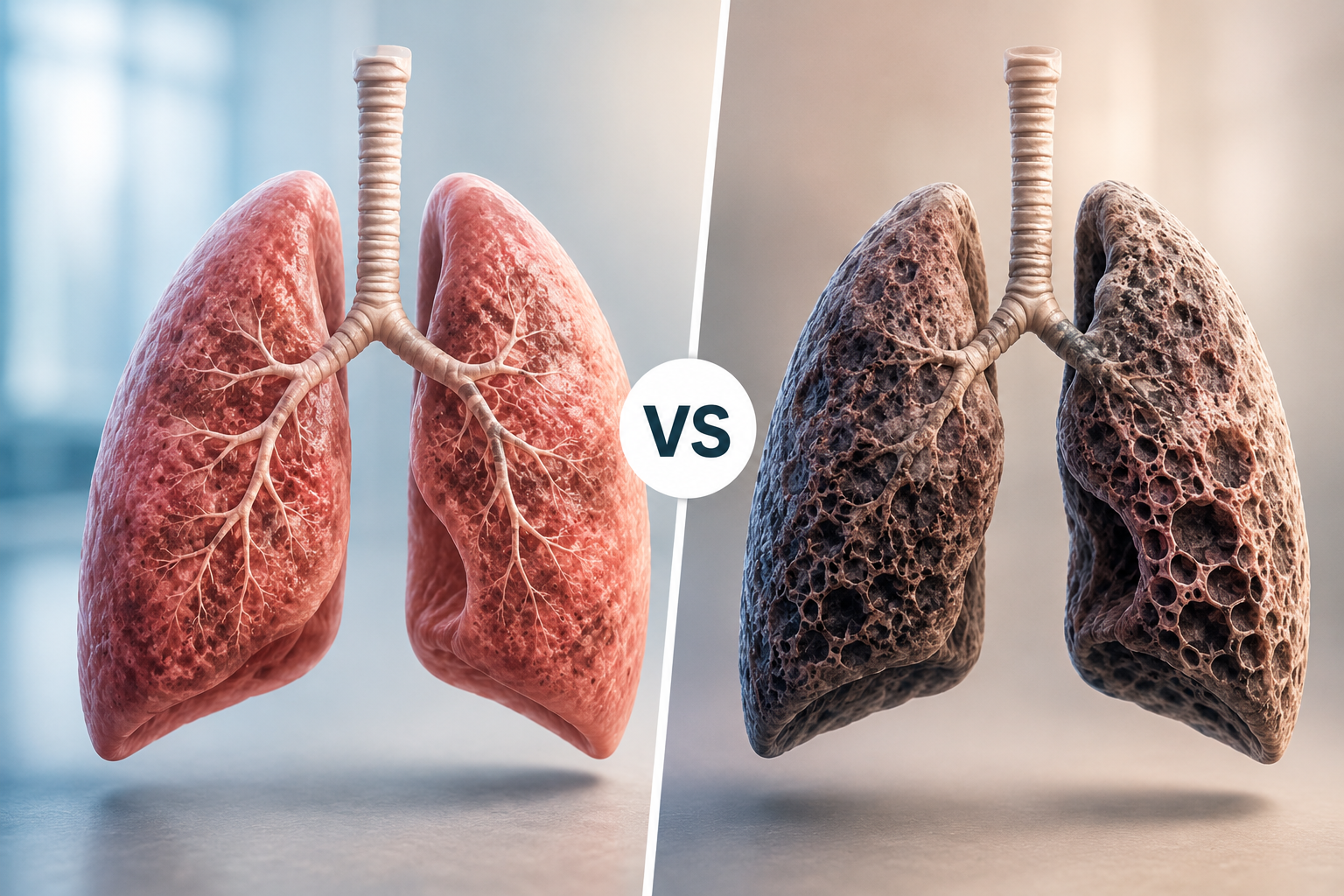
Let’s start with something simple: if you’ve recently been told you have Interstitial Lung Disease — or if someone you love is struggling to catch their breath and the doctors have mentioned terms like “Pulmonary Fibrosis” — it’s completely okay to feel overwhelmed. These are big, scary-sounding words. And the internet, as helpful as it can be, often makes things more confusing.
So let’s slow down. Let’s talk about what these conditions actually mean, how they’re different from each other, and most importantly — what you can do about them. Because there is hope. And that’s something the team at Ccube Homeopathy, led by the wonderfully dedicated Dr. Rashmi Chandwani, has been helping patients hold onto for years.
First Things First — What Exactly Is Interstitial Lung Disease?
Here’s a way to think about it. Your lungs are made up of millions of tiny air sacs, like little balloons, surrounded by delicate tissue. That tissue — the interstitium — is what gives your lungs their structure and flexibility. Interstitial Lung Disease (ILD) is what happens when something goes wrong in that tissue.
But here’s what most people don’t realise: ILD isn’t one disease. It’s actually an umbrella term for over 200 different lung conditions that all affect this same area. Some are caused by autoimmune disorders. Some are triggered by environmental exposure. Some develop after taking certain medications. And in some cases, no clear cause is ever found.
What they all have in common is that they make it harder for oxygen to move from your lungs into your blood. And that, over time, is what leads to breathlessness, fatigue, and the other symptoms that bring people to doctors — and eventually to doctors like Dr. Rashmi Chandwani at Ccube Homeopathy.
What Are the Early Symptoms of ILD? (And Why They’re So Easy to Miss)
One of the most heartbreaking things about ILD is that its early symptoms are incredibly easy to brush off. People assume they’re just “out of shape” or “getting older.” By the time they seek help, the disease has often already been progressing for months, sometimes years.
So please — don’t dismiss these signs:
- Shortness of breath during everyday activities — climbing stairs, walking across a room, even talking on the phone. It starts subtly, then slowly gets worse.
- A dry, stubborn cough — one that doesn’t produce mucus, doesn’t respond to cough syrup, and just won’t quit.
- Tiredness that doesn’t go away — even after a full night’s sleep, you wake up exhausted.
- Unexplained weight loss — the kilos are dropping, but not because of diet or exercise.
- Clubbing of the fingertips — the ends of the fingers become slightly rounded and wider, which can happen in more advanced stages.
If any of these sound familiar, please don’t wait. Early diagnosis and early treatment genuinely make a difference. At Ccube Homeopathy, Dr. Rashmi Chandwani always says that the body’s ability to heal is strongest when we give it support early — before the damage becomes irreversible.
So Then, What Is Pulmonary Fibrosis?
Think of Pulmonary Fibrosis (PF) as ILD’s more serious, stubborn cousin. While ILD refers broadly to conditions that inflame and damage lung tissue, Pulmonary Fibrosis is what happens when that damage leads to permanent scarring — fibrosis.
Imagine a fresh, elastic sponge versus a dried-out, stiff one. That’s roughly what happens to the lungs with pulmonary fibrosis. The tissue thickens, hardens, and loses its ability to expand. Breathing becomes a genuine effort.
The most common and most researched form is called Idiopathic Pulmonary Fibrosis (IPF) — “idiopathic” simply meaning doctors haven’t found a definitive cause. It tends to affect people over 50, more often men, and it is progressive — meaning it doesn’t stay the same over time.
Can Interstitial Lung Disease Turn Into Pulmonary Fibrosis?
This is one of the questions Dr. Rashmi Chandwani hears most often from patients sitting across from her at Ccube Homeopathy — usually asked quietly, with worry in their eyes.
The honest answer is yes, it can. Not all types of ILD lead to fibrosis, but many do — especially if inflammation is left unaddressed for too long. Think of it this way: repeated injury to any tissue in the body, left unhealed, eventually leads to scar tissue. The lungs are no different.
Certain forms of ILD carry a higher risk of progressing to significant fibrosis: hypersensitivity pneumonitis (often caused by inhaled environmental triggers), connective tissue disease-associated ILD, and nonspecific interstitial pneumonia (NSIP) are among the more well-known culprits.
This is exactly why Dr. Rashmi Chandwani’s approach at Ccube Homeopathy focuses not just on relieving symptoms but on actively calming the inflammatory process — to protect healthy lung tissue and slow or prevent the progression toward fibrosis. Because prevention, in this case, really is better than cure.
ILD vs Pulmonary Fibrosis: The Key Differences, Simplified
We know the medical terminology can get confusing. So here’s a simple breakdown:
- Scope: ILD is the big category. Pulmonary Fibrosis is one specific type within it.
- Reversibility: Some forms of ILD can improve with the right treatment. The scarring of PF is largely permanent — which is why catching it early matters so much.
- Cause: ILD has many known causes. Most PF cases are idiopathic (cause unknown).
- Progression: ILD varies — some forms are slow, some fast. PF tends to be steadily progressive.
- Symptoms: Both share breathlessness and dry cough, but PF symptoms are usually more severe and harder to manage.
Does ILD Always Get Worse Over Time? Here’s the Honest Answer.
Not always — but it can. And that uncertainty is one of the hardest parts of living with this diagnosis.
The truth is, ILD is unpredictable. Some patients experience very slow progression and live full, active lives for many years. Others deteriorate more quickly. The type of ILD you have, the underlying cause, your age, your immune system’s response, and how early treatment begins — all of these factors play a role.
At Ccube Homeopathy, Dr. Rashmi Chandwani has worked with patients across all stages of ILD. Many come in feeling hopeless, having been told by conventional medicine that there’s “not much to be done.” What they find, more often than not, is that their quality of life improves, their breathlessness eases, their cough becomes less disruptive, and their energy returns — gradually, gently, but meaningfully. That’s the power of treating the whole person.
What Causes ILD and Pulmonary Fibrosis?
Understanding the ‘why’ behind your condition is always empowering. Here are the most common causes of ILD:
- Autoimmune diseases — rheumatoid arthritis, lupus, scleroderma, and Sjögren’s syndrome can all cause or worsen ILD.
- Environmental and occupational exposure — prolonged exposure to asbestos, silica dust, coal dust, bird droppings or feathers (bird fancier’s lung), and certain chemicals.
- Medications — some chemotherapy drugs, certain antibiotics, and heart medications have been linked to ILD.
- Radiation therapy — particularly when aimed at the chest area.
- Chronic infections — that trigger persistent lung inflammation.
For Pulmonary Fibrosis, the cause is usually unknown. But smoking, genetics, viral infections, and micro-aspiration of stomach acid are all considered possible contributing factors.
What Is the Best Treatment for Interstitial Lung Disease?
Here’s where things get really important — and where homeopathy has so much to offer.
Conventional medicine typically turns to corticosteroids to reduce inflammation, immunosuppressants to calm an overactive immune system, and newer antifibrotic drugs for pulmonary fibrosis. These can slow progression in some cases — but they also come with significant, sometimes debilitating, side effects. And for many patients, especially over the long term, they’re simply not sustainable.
Homeopathy approaches ILD and Pulmonary Fibrosis from a completely different angle — and that’s exactly what makes Ccube Homeopathy such a powerful complement (or even alternative) to standard care. Under Dr. Rashmi Chandwani’s expert hands, treatment is never generic. It’s always rooted in the individual — your specific symptoms, your emotional state, your medical history, your constitution.
Here’s why more and more patients are choosing this path:
- Zero toxic side effects — homeopathic medicines are gentle, natural, and safe for long-term use. No compromising your liver, kidneys, or immune system.
- Immune system rebalancing — homeopathy doesn’t just suppress; it helps the immune system find its own healthy rhythm.
- Meaningful symptom relief — breathlessness, that nagging dry cough, crushing fatigue, and even the anxiety of living with a chronic illness all respond well to individualised homeopathic care.
- Slowing fibrotic progression — several homeopathic remedies have a well-documented affinity for connective and lung tissue, supporting the body’s efforts to limit scarring.
- The human touch — at Ccube Homeopathy, Dr. Rashmi Chandwani genuinely listens. That alone — being truly heard by your doctor — changes how patients feel about their healing journey.
A Peek Into Homeopathic Remedies for Lung Health
Homeopathy has a deep, centuries-old tradition of treating respiratory conditions. Dr. Rashmi Chandwani at Ccube Homeopathy selects remedies based on each patient’s full, unique picture — not just their diagnosis. That said, here are some remedies that frequently come up in ILD and PF care:
- Arsenicum Album — for patients with anxious breathlessness, especially worse at night or in cold air. Often accompanied by restlessness and exhaustion.
- Bryonia Alba — when even the smallest movement triggers coughing or chest discomfort. These patients want to stay very, very still.
- Silicea — one of the most important remedies for connective tissue support. Helps the body resist the formation of excessive fibrous deposits.
- Phosphorus — for burning sensations in the chest, significant weakness, and a tendency toward haemorrhages or bleeding in the lungs.
- Stannum Metallicum — for profound weakness and difficulty breathing, especially when patients feel like they can’t get enough air no matter how hard they try.
⚠️ A word of caution: never self-prescribe. These remedies need to be carefully matched to your individual case. Please always consult a qualified homeopathic doctor before taking the medicine.
Small Daily Choices That Make a Big Difference
While working with your doctor and homeopath is crucial, there are real, tangible things you can do at home to support your lung health:
- Stop smoking — if there’s one thing on this list that matters most, it’s this. Even if you’ve smoked for decades, stopping now helps.
- Clean your air — invest in a good HEPA air purifier for your home, especially your bedroom. Avoid areas with heavy dust, smoke, or chemical fumes.
- Breathe intentionally — simple breathing exercises and pulmonary rehabilitation can genuinely strengthen your respiratory muscles over time.
- Eat to reduce inflammation — fruits, vegetables, whole grains, fatty fish, turmeric, and ginger all work quietly in the background to support healing.
- Don’t carry the emotional weight alone — chronic illness is emotionally exhausting. Seek support, whether from a counsellor, a support group, or loved ones.
- Keep up with monitoring — regular check-ins with your healthcare team help catch any changes early, so you can respond quickly.
Conclusion: Breathe Better With Ccube Homeopathy & Dr. Rashmi Chandwani
Living with Interstitial Lung Disease or Pulmonary Fibrosis is not easy. Some days are harder than others. But you are not powerless, and you are not alone.
With early awareness, the right care, and a treatment approach that truly sees you as a whole person, it is absolutely possible to breathe easier, feel stronger, and live more fully — even with a chronic lung condition.
Ccube Homeopathy & Dr. Rashmi Chandwani — Your Partners in Lung Health
At Ccube Homeopathy, we’ve seen what happens when patients feel truly cared for — when their doctor remembers their name, knows their story, and tailors every remedy to their specific needs. That’s the environment that Dr. Rashmi Chandwani has spent years building at Ccube Homeopathy. Her deep expertise in chronic respiratory conditions, combined with a genuinely compassionate approach to patient care, has made her one of the most trusted homeopathic practitioners for ILD and Pulmonary Fibrosis in India.
Whether you’ve just received a diagnosis, have been managing ILD for years, or simply want a more holistic approach to your lung health, Ccube Homeopathy is here for you. Dr. Rashmi Chandwani doesn’t just treat lungs. She treats people. And that difference — that deeply human, deeply caring difference — is what sets Ccube Homeopathy apart.
Your lungs deserve gentle, expert care. Book your consultation with Dr. Rashmi Chandwani at Ccube Homeopathy today.