For parents, alopecia areata in children can be a surprising and emotionally difficult situation. If a child suddenly gets a small, smooth area of baldness, parents may find themselves asking whether it will go away, if further hair loss might occur, and when it is appropriate to get professional advice. Alopecia areata usually starts with sudden patches of hair loss that are round or oval in shape and may at times involve the eyebrows, the eyelashes or other areas where hair grows. By using a personalised homeopathic method, at CCube Homoeopathy, Dr. Rashmi Chandwani concentrate on considering the child as a whole and offer personalised holistic care based on the child’s individual symptoms and general constitution.
What does alopecia areata mean in children?
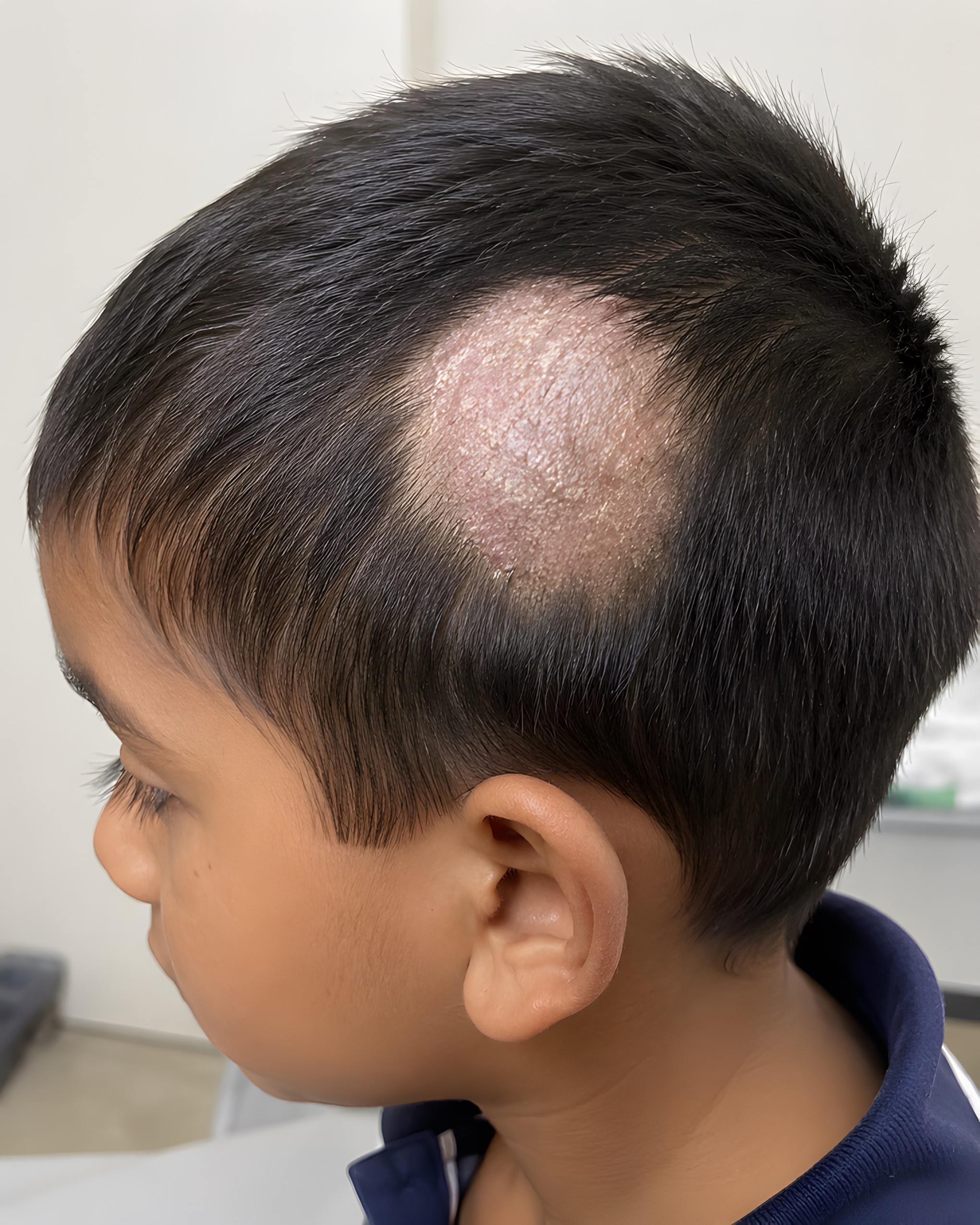
Alopecia areata is a disorder in which the immune system wrongly attacks the hair follicles, causing hair to fall out. It often occurs in children and can first be seen as a well-defined, smooth patch on the scalp. Parents should note these early signs since seeking timely advice enables a thorough evaluation of their child’s condition. Dr Rashmi Chandwani at CCube Homoeopathy thinks that each child with alopecia areata should have an individual assessment rather than be given a uniform treatment, the homoeopathic care being aimed at the child’s general state of health and at the symptoms of hair loss.
What does alopecia areata appear like?
The typical case appears as a smooth, round or oval area in which the hair has suddenly vanished; there can be a single such patch or several patches of varying sizes. In some children, loss of eyebrows or eyelashes also occurs, and in more severe instances the affected areas may spread to larger parts of the scalp or body. Changes to the nails, for example the appearance of small depressions or ridges, may likewise take place. Dr Rashmi Chandwani advise parents to notice these kinds of changes and to obtain the right homoeopathic consultation whenever they observe unusual or rapidly progressing hair loss.
At what stage should parents consider seeing a doctor about hair loss?
It is particularly important to consult such a well-qualified homeopathic practitioner if new patches appear, if an existing patch increases in size, or if hair loss starts to occur in other areas. Although alopecia areata can at times progress from limited patchy hair loss to more widespread hair loss, the course of the condition varies from child to child. At CCube Homoeopathy, Dr Rashmi Chandwani carries out a personalised homoeopathic assessment, focusing on the onset, progression and the full range of the child’s symptoms.
Consult Early When Hair Loss Is Spreading
A good reason for seeking advice early is the possibility of the condition progressing. When parents see that one bald spot is getting bigger or that more spots are appearing, they should not delay getting a professional opinion. Dr. Rashmi Chandwani evaluate the full range of symptoms and then prepare a personalised plan in accordance with the child’s specific case.
When Eyebrows and Eyelashes Are Affected
There is another reason why parents should arrange a consultation, namely when their child is experiencing loss of hair on the eyebrows or eyelashes since alopecia areata can cause loss of hair in those areas as well as on the scalp. Since such changes can be very obvious and have a considerable emotional impact on a child, parents should offer reassurance instead of highlighting the child’s appearance excessively. Dr Rashmi Chandwani stresses compassionate, child-centred care together with an individualised homoeopathic approach designed to promote the child’s overall wellbeing.
When the Child Is Becoming Emotionally Distressed
Hair loss is more than just a physical issue; as children grow more socially aware, the fact of having lost hair can have an effect on their confidence and on their emotional well-being. Parents should therefore seek advice when hair loss is causing them considerable embarrassment, leading to withdrawal, sadness, anxiety or a reluctance to take part in school and social activities. Dr Rashmi Chandwani tells the importance of considering the child as a whole, including their emotional and behavioural aspects, while offering individually tailored homoeopathic treatment.
Why Early Attention Matters
The fact that early attention is given doesn’t mean that parents should become anxious about each individual strand of hair; it only implies that any unexplained, sudden or progressive hair loss should be properly evaluated. Alopecia areata can present in various patterns and progress in different ways, with some children having spontaneous regrowth while others go on to develop more patches. At CCube Homoeopathy Dr Rashmi Chandwani adopts a thorough method by first examining the child’s history, the way symptoms have developed, their constitutional characteristics and any other related complaints before deciding on an individualised homoeopathic prescription.
How Homoeopathy Approaches Alopecia Areata in Children
Instead of merely focusing on the visible bald spot, homoeopathy looks at the entire range of the child’s symptoms. The evaluation may include factors such as the age when the condition first appeared, the pattern of hair loss, any sensations on the scalp, the child’s general health, their emotional traits, their sleep and appetite, constitutional tendencies and any other symptoms that accompany the condition. Dr Rashmi Chandwani adopt an individualised approach to homoeopathy rather than supposing that all children with alopecia areata need the same remedy. The aim is to offer personalised care that takes into account the child as a whole individual.
When should parents consult a hair-loss doctor for a child with alopecia areata?
Parents should consider consultation when they notice sudden, round or oval bald patches, unexplained hair thinning, or repeated hair loss. Early individualised homoeopathic assessment can help understand the child’s overall health, constitutional pattern and factors associated with the hair-loss tendency.
Is one small bald patch enough to seek homoeopathic care?
Yes. Even a single smooth bald patch can be an appropriate reason to consult a qualified homoeopathic doctor. Homoeopathy focuses on the child as a whole rather than looking only at the visible patch, with the aim of supporting the child’s overall health and addressing the individual tendency toward recurrent complaints.
Should parents wait if the child has only mild hair loss?
Parents do not necessarily need to wait for hair loss to become extensive. A homoeopathic consultation can provide an opportunity for detailed case-taking and individualised care at an early stage, particularly when the cause of patchy hair loss is not clear.
When does increasing hair loss require professional attention?
If bald patches are becoming larger, new patches are appearing, or hair loss is occurring in several areas, parents should seek professional evaluation. Alopecia areata can sometimes progress from limited patchy loss to more extensive hair loss, so monitoring the pattern is important.
Should parents consult a homoeopathic doctor if the eyebrows or eyelashes are affected?
Yes. Hair loss involving the eyebrows or eyelashes deserves careful attention. A qualified homoeopathic doctor can take a detailed case history and individualise the homoeopathic approach according to the child’s complete symptom picture.
Can stress or emotional factors be discussed during homoeopathic consultation?
Absolutely. Parents should tell the homoeopathic doctor about significant emotional changes, stressful experiences, sleep disturbances or changes in the child’s behaviour. These details may be relevant to understanding the child’s overall individual pattern. Stress has also been reported as a factor that may be associated with alopecia areata episodes.
When should parents seek homoeopathic care if hair is not growing back?
If a bald patch persists without noticeable regrowth, parents can consult a qualified homoeopathic doctor rather than continuing to wait indefinitely. Hair regrowth in alopecia areata can be unpredictable, and a detailed assessment can help guide an individualised homoeopathic care plan.
Why is early homoeopathic consultation valuable for children with alopecia areata?
Early consultation allows parents to document the onset, progression and pattern of hair loss and provide the homoeopathic physician with a complete history. With individualised homoeopathic care, the focus can be on supporting the child’s overall well-being and addressing the tendency toward recurring hair-loss complaints. Parents should also ensure that unexplained or ongoing childhood hair loss receives appropriate medical assessment, because several conditions can cause hair loss in children.
Supporting the Child During Homoeopathic Care
It is important for parents to help create a supportive atmosphere, and they should make sure that their children know hair loss in no way determines their personality, capabilities or value. In addition, parents can monitor the areas that are affected, take photographs of the patches at regular intervals to compare them, continue to follow gentle hair-care practices and mention any changes when attending their follow-up appointments. Dr Rashmi Chandwani combine this supportive strategy with personalised homoeopathic treatment, assisting parents in understanding the child’s changing symptoms.
CCube Homoeopathy: The Pioneer in Individualised Homoeopathic Care
CCube Homoeopathy, headed by Dr Rashmi Chandwani, follows a patient-centred method of providing homoeopathic treatment in which attention is paid to the individual symptoms as well as to the patient’s overall constitution. In the case of a child suffering from alopecia areata, the emphasis is not merely on the sight of the bald patch but rather on gaining a full understanding of the child’s general health. The aim of CCube Homoeopathy is to offer individually tailored homoeopathic care by means of thorough case-taking, careful observation and regular follow-up. The great deal of clinical experience that Dr Rashmi Chandwani has acquired further underpins an individualised approach in which each child’s case is seen as unique. Parents who are looking for homoeopathic advice concerning childhood alopecia areata will find at CCube Homoeopathy a compassionate consultation, a personal assessment and long-term care aimed at the child’s overall wellbeing.
Final Thoughts
At first, alopecia areata in children can be quite frightening, but parents have no need to meet the situation with fear or confusion. Any of the following should prompt parents to obtain professional advice: the appearance of a sudden smooth bald spot, a growing number of patches, quick progression of hair loss, involvement of the eyebrows or eyelashes, changes to the nails, or emotional distress. With Dr Rashmi Chandwani, parents can consider a tailored homoeopathic method which takes into account the child’s physical, emotional and constitutional circumstances. Early intervention, kind support and regular follow-up can help parents feel more informed and confident as they support their child through this experience. Dr Rashmi Chandwani stresses on understanding each child’s individual case; parents can also review CCube’s