
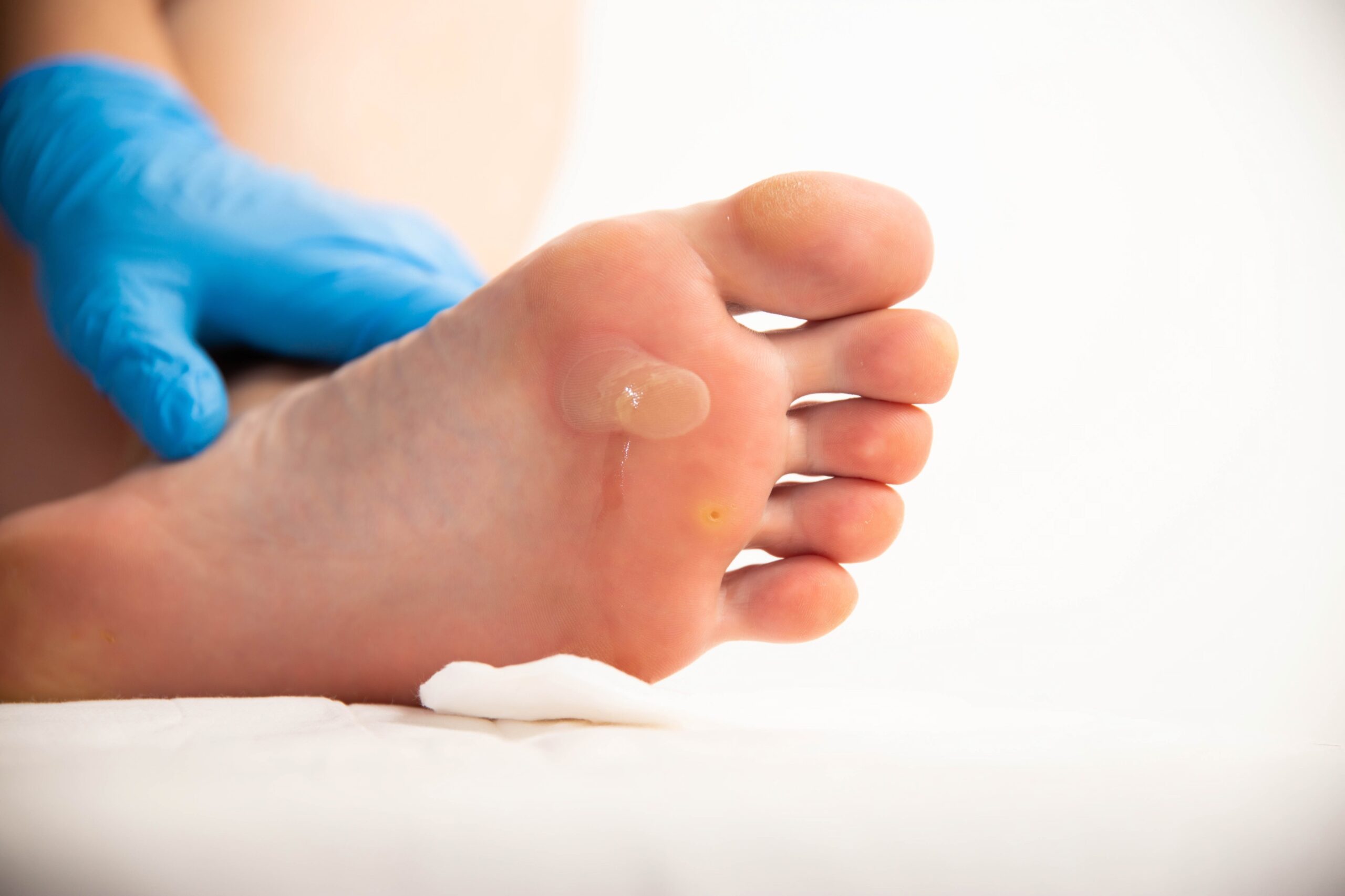
Plantar warts are little rough growths that appear on the soles of the feet (particularly on the heels, balls of the feet and areas that are under pressure when you’re walking). They are caused by the human papilloma virus (HPV) which affects the outer layer of the skin. They are generally not dangerous at all but can be quite uncomfortable, tender and painful when you’re walking or standing. At CCube Homoeopathy under the care of Dr Rashmi Chandwani we would always encourage the patient to understand their skin problem and to approach it with patience and the right kind of care. Homoeopathy is a very individualised approach and it takes into account the whole person rather than just the wart that you can see.
What are plantar warts?
Plantar warts are the ones you recognise by their rough, thickened surface and the fact that they’re on the sole of the foot. They can be a single wart or a number of warts. You may sometimes see tiny black or brown dots within the wart and these are simply small clotted blood vessels. They’re different to a normal callus in that they can break the lines of the skin of the foot.
According to the individualised approach that CCube Homoeopathy take, Dr Rashmi Chandwani looks at the wart itself, its location, how long it’s been there and the level of discomfort it causes. Some plantar warts are quite small, others grow quite deep into the skin as a result of the constant pressure of the body weight.
Can plantar warts be treated at home?
Home care is obviously a big part of the management of plantar warts with regard to foot hygiene and preventing the spread of the warts. The patient must not scratch, bite, cut or attempt to pull the wart out. Simple measures such as keeping the feet clean and dry, changing socks regularly and avoiding the use of shared footwear are all sensible everyday things to do.
At CCube Homoeopathy, Dr Rashmi Chandwani will of course encourage you to maintain good foot care as part of your individualised homoeopathic treatment. It is vital to bear in mind that no home remedy can be guaranteed to eradicate every single plantar wart.
Effective Home-Care Habits for Plantar Warts
Healthy feet are an important part of managing plantar warts. The following habits can help minimise irritation and reduce the possibility of spreading the infection:
- Keep your feet clean: wash them regularly and dry them well, particularly between the toes.
- Change socks every day – clean, dry socks are essential for keeping your feet hygienic.
- Don’t pick at the wart: scratching or pulling at it could damage the skin and actually encourage the virus to spread.
- Wear comfortable footwear – go for shoes that don’t put any undue pressure on the area in question.
- Don’t share your footwear: personal footwear, towels and nail care tools should not be shared.
- Protect your feet in the communal areas: wear appropriate footwear around the swimming pools and communal bathing areas.
- Don’t cut the wart: absolutely never try to cut it, burn it or otherwise forcibly remove it at home.
Homoeopathy and Plantar Warts
Homoeopathy deals with health problems through individualised case-taking. The choice of medicine in homoeopathic practice is based on the appearance of the wart, its site, its texture, the sensations it causes and the totality of the patient’s symptoms.
Some remedies traditionally discussed in homoeopathic materia medica for warts include:
- Thuja occidentalis: traditionally used in the case of various types of warts.
- Causticum: traditionally linked with certain types of hard, irregular warts.
- Nitricum acidum: If the warts are rough, painful and tend to bleed.
- Dulcamara: traditionally for various skin growths and wart types.
- Ruta graveolens: Traditionally referenced in homoeopathic literature in relation to plantar warts with soreness.
These are the traditional homoeopathic indications and a remedy would not be selected simply because a person has a plantar wart. At CCube Homoeopathy, Dr Rashmi Chandwani’s approach is to take the individual into account and not just prescribe the same remedy to every single person.
Safety Precautions: What you should avoid
People with diabetes, poor circulation or reduced sensation in the feet need to be particularly cautious. Any growth that bleeds, changes in appearance, becomes progressively more painful or has surrounding redness should be looked at.
At CCube Homoeopathy patient safety is very much a consideration. Dr Rashmi Chandwani would advise people not to go experimenting with potentially harmful home remedies and to seek homoeopathic treatment as soon as possible.
Frequently Asked Questions About Plantar Warts
Can homoeopathy help manage plantar warts?
Yes. Homoeopathy offers an individualised approach to plantar warts. At CCube Homoeopathy, Dr Rashmi Chandwani considers the wart’s appearance, location, duration and associated symptoms when selecting homoeopathic medicines.
Which homoeopathic medicines are commonly considered for plantar warts?
Thuja occidentalis, Causticum, Nitricum acidum, Dulcamara and Ruta graveolens are traditionally mentioned in homoeopathic materia medica. Medicine selection should be individualised by a qualified practitioner.
Are plantar warts contagious?
Yes. Plantar warts are associated with HPV and can spread through direct contact or contaminated surfaces. Maintaining foot hygiene and avoiding shared footwear can help reduce transmission.
Can plantar warts cause difficulty while walking?
Yes. Plantar warts may grow inward due to pressure from body weight, resulting in tenderness or discomfort while standing and walking.
Why consult CCube Homoeopathy for plantar warts?
CCube Homoeopathy, under the guidance of Dr Rashmi Chandwani, emphasises detailed case-taking, individualised homoeopathic treatment and patient education. These factors make Ccube homeopathy stand-alone comparing to others.
Why Choose CCube Homoeopathy? The Benchmark in Individualised Care
CCube Homoeopathy is very much a patient centred practice, with a strong emphasis on detailed case-taking, careful consideration of the individual symptoms and a very personal consultation. Skin problems of any kind such as plantar warts can have a huge impact on comfort, confidence and mobility so it is very important that the patient is given compassionate guidance. The clinic is not going to treat every patient in the same way.
Dr Rashmi Chandwani brings her clinical experience and her commitment to the practice of homoeopathy to each consultation and is there to help the patient understand their own situation and to make an informed decision about their care. The standard of good clinical care is not just about prescribing a medicine. It is about listening, explaining, guiding and above all else, putting the patient first. Ccube Homoeopathy is committed to patient education and to individual attention and that is what makes it a very trusted practice.
Final Thoughts
Plantar warts may appear to be minor skin concerns, but their location on the soles of the feet can make everyday activities such as walking, standing and exercising uncomfortable. Understanding their causes, recognising their characteristics and maintaining proper foot hygiene are essential steps towards managing them responsibly. At CCube Homoeopathy, Dr Rashmi Chandwani believes in the importance of patient education, compassionate consultation and responsible healthcare guidance. Remember that healthy skin care begins with awareness, consistency and informed decision. Your feet deserve the same attention and care as the rest of your body.