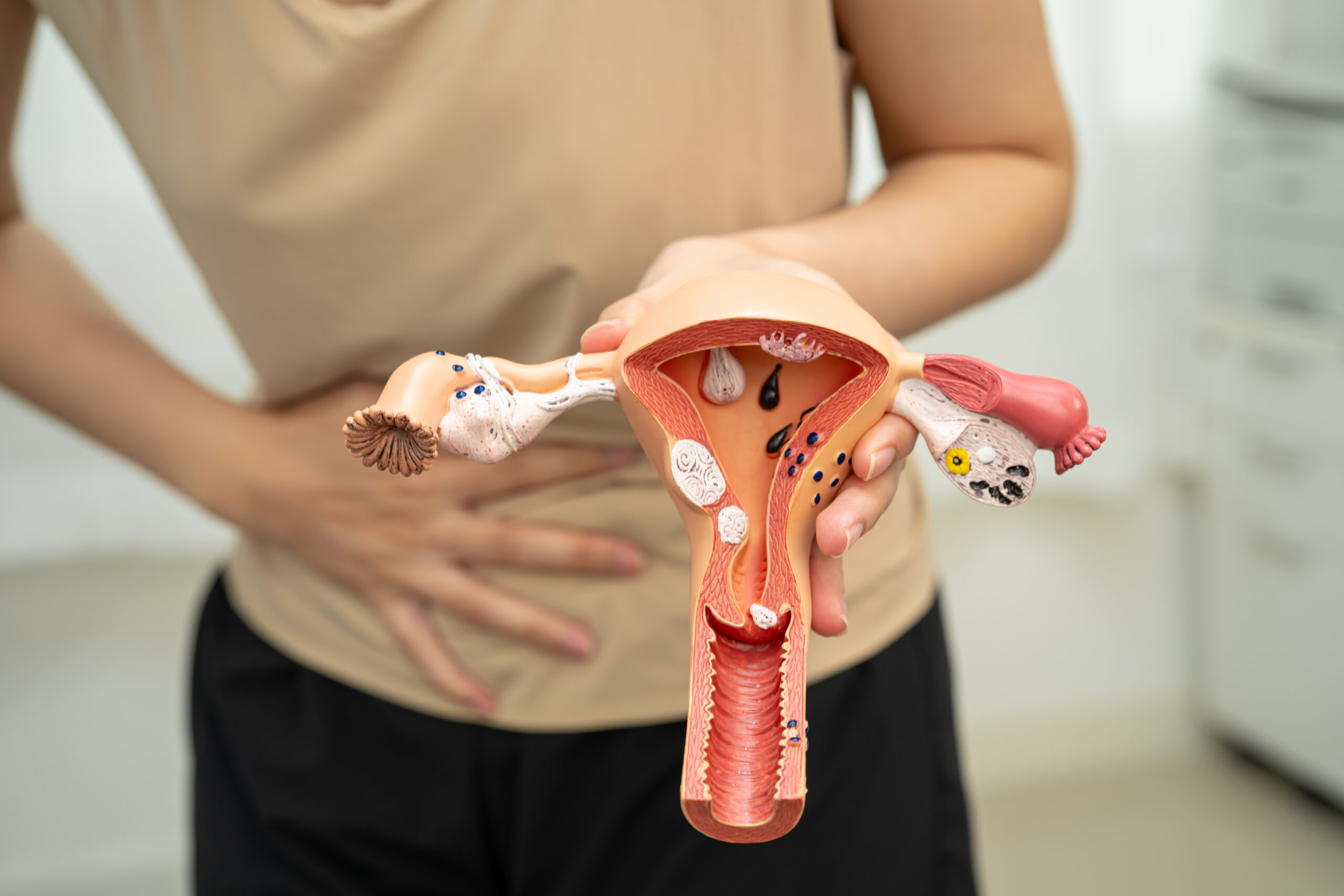
Women’s reproductive health conditions can of course present with very similar symptoms and it can be quite difficult to work out what is actually going on in the womb. Two such conditions that can have a significant impact on menstrual health and quality of life are adenomyosis and uterine fibroids. They can both lead to heavy periods, pelvic pain and painful periods but they are quite different in their aetiology, location and nature.
Understanding the difference between adenomyosis and uterine fibroids (symptoms and all) is a vital first step in getting to the right diagnosis and the right care.
This piece looks at the difference between adenomyosis and fibroids, answers some of the common questions people have and on the use of homoeopathy.
At Ccube homoeopathy, Dr Rashmi Chandwani follows an individualized approach while caring for women with adenomyosis and fibroids. She considers not only the diagnosis but also each patient’s menstrual pattern, pain, bleeding, associated complaints, general constitution and overall wellbeing.
What Is Adenomyosis?
Adenomyosis is a condition in which the endometrial tissue (the tissue which lines the uterus) grows into the muscular wall of the uterus. This can lead to the muscle of the uterus becoming thicker and the uterus itself becoming enlarged.
The precise aetiology of adenomyosis is unknown. Hormonal factors and other biological factors are thought to be involved. It’s a condition that’s commonly diagnosed in women in their reproductive years, though it can occur at any age.
Common symptoms of adenomyosis
- Heavy or prolonged periods.
- Severe menstrual cramps.
- Chronic pelvic pain or pressure.
- Pain during sexual intercourse.
- A uterus that is bigger than usual or feels sore.
- Fatigue due to heavy bleeding and iron deficiency anaemia.
Some women have adenomyosis with no symptoms at all. For others the pain and bleeding can be so bad as to impact their day to day lives.
Through detailed case-taking, Dr Rashmi chandwani at Ccube homoeopathy aims to understand how the condition affect each woman differently. Homoeopathic care is then personalised according to the individual symptom pattern, with regular follow ups to monitor changes and overall progress.
What Are Uterine Fibroids?
Uterine fibroids (also known as leiomyomas) are benign tumours of the uterine muscle. They can be numerous and/or large and can occur in a variety of locations.
Some fibroids are small and completely asymptomatic, others can become large enough to impact the uterine cavity, the bladder, the bowel and the surrounding pelvic anatomy.
Common symptoms of uterine fibroids
- Heavy menstrual bleeding or periods that last for a long time.
- Pelvic pressure or a sense of fullness.
- Lower abdominal enlargement.
- Frequent urination.
- Constipation or difficulty in emptying the bowel.
- Lower back discomfort.
- Fertility or pregnancy related complications in some cases.
The symptoms are largely going to be dictated by the size and location of the fibroids. Fibroids that distort the cavity of the uterus can lead to problems with fertility. Larger fibroids can of course cause pressure symptoms.
At Ccube homoeopathy, Dr. Rashmi Chandwani approach combines personalised homeopathic care with appropriate investigations, particularly in women experiencing persistent heavy bleeding, severe pain or anemia.
Adenomyosis vs Uterine Fibroids: Symptoms and Key Differences
Although they can present with quite similar symptoms there are a number of features which may help to differentiate them.
|
Feature |
Adenomyosis |
Uterine fibroids |
|
Underlying condition |
Tissue resembling the uterine lining grows into the uterine muscle | Benign growths develop from uterine muscle cells |
|
Location |
Within the muscular wall of the uterus | Within the uterine wall or projecting into or outside the uterus |
|
Menstrual pain |
Often prominent and may worsen over time | Variable; may be mild or significant |
| Heavy bleeding | Common |
Common, particularly with certain fibroid locations |
|
Uterine appearance |
Often diffusely enlarged and tender |
May be enlarged or irregular in shape |
| Pressure symptoms | Possible |
More likely with larger fibroids |
| Diagnosis | Ultrasound and sometimes MRI |
Ultrasound and sometimes MRI |
Neither condition can be reliably diagnosed on the basis of symptoms alone. They can both occur together, which can complicate the diagnosis.
How to tell the difference between adenomyosis and fibroids?
If you’re wondering ‘how do you tell the difference between adenomyosis and a fibroid?’ the first thing to do is look at the pattern of your symptoms and then consult a doctor.
Adenomyosis is typically linked to progressively more painful periods, heavy bleeding and diffuse pelvic tenderness. Fibroids can also cause heavy bleeding but larger fibroids are more likely to cause abdominal fullness, frequency of urination and/or pressure.
However, those are just generalities rather than hard and fast rules.
A healthcare professional may recommend:
Medical history and examination: your menstrual history, your pain history and your pelvic examination can all be of use in the assessment.
Pelvic ultrasound: this is the most commonly used investigation to detect fibroids and to look for features which may suggest the presence of adenomyosis.
MRI: This may be of use when the ultrasound is not entirely clear or when you need a bit more detail.
Further investigations: blood tests may be indicated to look at the hemoglobin level (i.e. to check for anemia) or to investigate other potential causes of the abnormal bleeding.
The correct diagnostic approach will be determined by your symptoms, your age, your medical history and your reproductive plans. Rather than focusing only on ultrasound findings or size of the fibroid, Dr Rashmi chandwani, at Ccube homoeopathy takes a broader view of the patient health. Detailed case taking helps her understand the intensity of symptoms, menstrual changes, general tendencies and factors that may influence the patient’s day to day wellbeing.
Is adenomyosis more painful than fibroids?
A very common question is ‘is adenomyosis more painful than fibroids?’
Adenomyosis is frequently associated with severe period cramps and chronic pelvic pain. Part of the reason for this is that the uterine muscle in question can become inflamed and quite sensitive during the course of the menstrual cycle.
Fibroids on the other hand can be completely painless in some women and in others can be quite painful. The level of pain will vary from woman to woman and will depend on the size of the fibroid, whether it’s pressing on adjacent structures and whether or not it’s undergoing some kind of degenerative change.
Adenomyosis may therefore be more consistently linked to painful periods but it’s not necessarily going to be more painful than fibroids. The degree of symptom severity is very variable from person to person.
Severe or worsening pain must never be assumed to be ‘normal’ period pain. A medical assessment is the way to find out what’s going on and to then be able to treat it appropriately.
How do I know if I have fibroids or endometriosis?
Another very common question is ‘how do I know if I have fibroids or endometriosis?’
Endometriosis is distinct from both adenomyosis and fibroids. It’s the growth of endometrial tissue outside of the uterus (i.e. on the ovaries, on the fallopian tubes, on the pelvic lining etc).
Symptoms may include:
- Severe menstrual cramps.
- Chronic pelvic pain.
- Pain during or after sex.
- Pain with passing of bowel movements or with urination (especially around the time of menstruation).
- Difficulty becoming pregnant.
Fibroids are more likely to give rise to a feeling of pelvic pressure, abdominal bulk or heavy bleeding although the symptoms can overlap.
Adenomyosis and endometriosis can occur in conjunction. A pelvic ultrasound or an MRI may be of help in identifying some of the features.
Don’t self-diagnose on the basis of symptoms as these are all different conditions and will require different management.
Ccube homoeopathy: the pioneer in individualized homoeopathic care
Ccube homoeopathy headed by Dr Rashmi chandwani, follows a patient centered approach in which each woman’s individual symptoms, menstrual pattern, and overall constitution are carefully considered. Adenomyosis and uterine fibroids are two different conditions that can produce similar complaints, including heavy and prolonged menstrual bleeding, painful periods, pelvic pressure, abdominal discomfort and fatigue related to blood loss.
A key difference lies in where these conditions develop. In adenomyosis, tissue similar to uterine lining grows into the muscular wall of the uterus, often resulting in an enlarged, tender uterus. Depending on their size and location, fibroids may cause heavy bleeding, pelvic pressure or fullness, frequent urination, constipation and sometimes fertility- related concerns.
At Ccube homoeopathy, Dr Rashmi Chandwani concentrates on understanding the patient as a whole rather than focusing only on the diagnosis. Through detailed case taking, assessment of individual symptoms, general constitution and regular follow up, personalised and holistic care is offered according to each woman’s unique health picture. Appropriate investigations are also important for confirming the diagnosis, particularly in cases of severe pain, persistent heavy bleeding or anemia.
Final thought
Adenomyosis and uterine fibroids can share several symptoms, particularly heavy or prolonged menstrual bleeding, painful periods, pelvic discomfort and fatigue, but they are distinct conditions that require proper evaluation. Persistent heavy bleeding, increasing pelvic pain, abdominal swelling, pressure symptoms or signs of anemia should not be ignored and warrant consultations with healthcare professional. At Ccube homoeopathy, Dr. Rashmi Chandwani focusses on understanding each woman’s complete health picture, including her menstrual symptoms, associated complaints, general constitution and overall wellbeing. The approach emphasizes personalised and holistic care rather than treating every case of adenomyosis or fibroids in the same way.


